When Crypto Tracing Hits a Wall: The Off-Chain Attribution Layer


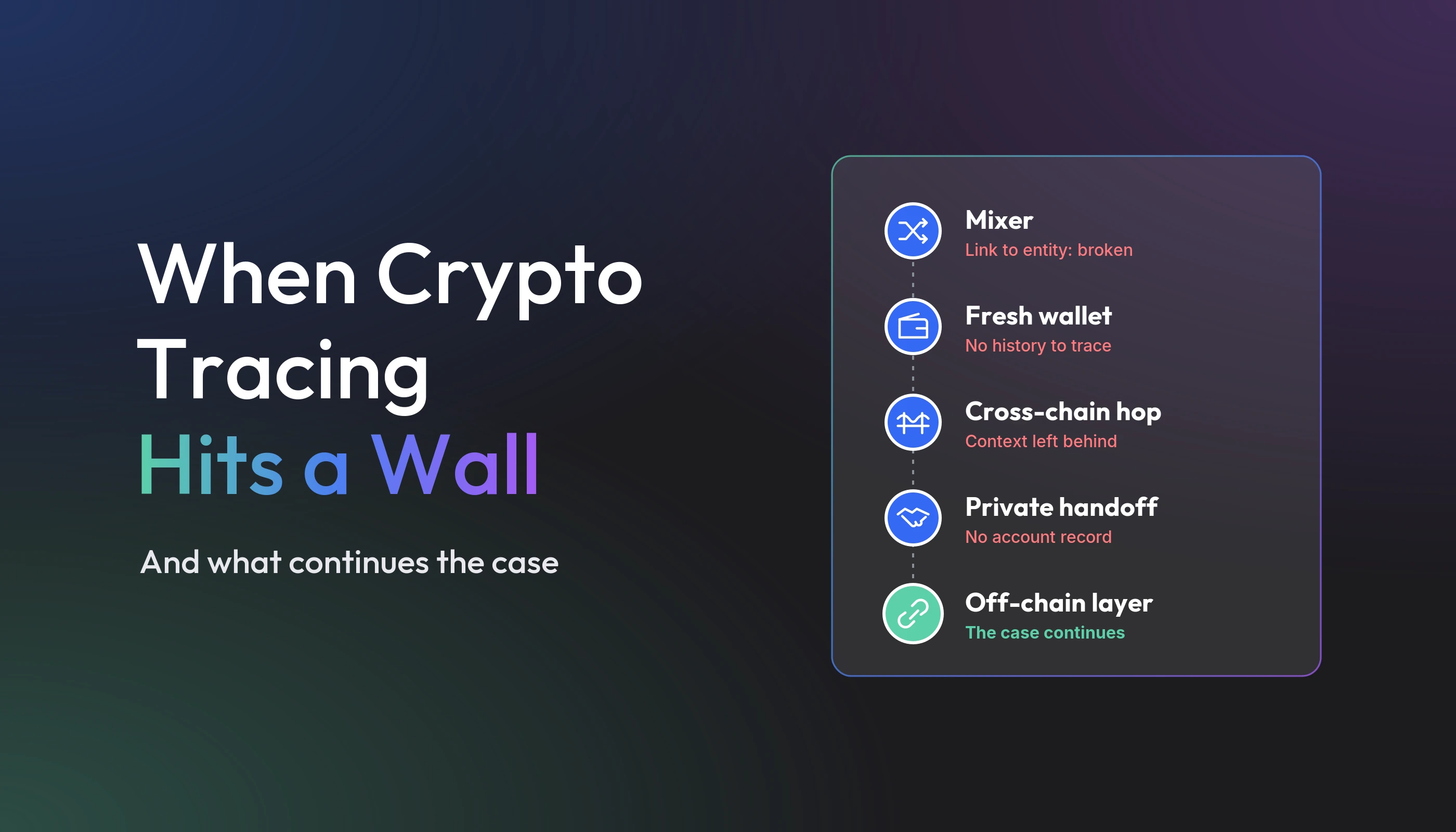
Crypto tracing hits a wall at four points: a mixer, a fresh wallet, a cross-chain hop and a handoff that never touches a regulated venue. Each removes the wallet's last link to a known entity, which is what on-chain attribution depends on. Off-chain crypto attribution does not need that link, so it continues the case where the trail goes cold.
On 21 April 2025, two months after his exchange lost roughly $1.4 billion to North Korea's Lazarus Group, Bybit chief executive Ben Zhou published a blunt accounting of where the money had gone. Just under 28 per cent of it, he said, had gone dark. His description of the route was almost a diagram: the untraceable funds flowed into mixers, then through bridges, then out to peer-to-peer and over-the-counter platforms.
That single sentence maps where crypto investigations fail. Not in a hundred places. In four.
Zhou named three of them while describing the largest crypto theft on record, which the FBI attributed to North Korean actors. The fourth, the fresh wallet, is what waits at the end of each of the others.
Each wall fails for a different reason. Only one of them looks like a problem better tooling could fix, and it is not the one most people assume. This is a guide to all four, and to the off-chain attribution layer investigators reach for when they hit one.
Why does crypto tracing fail at a mixer?
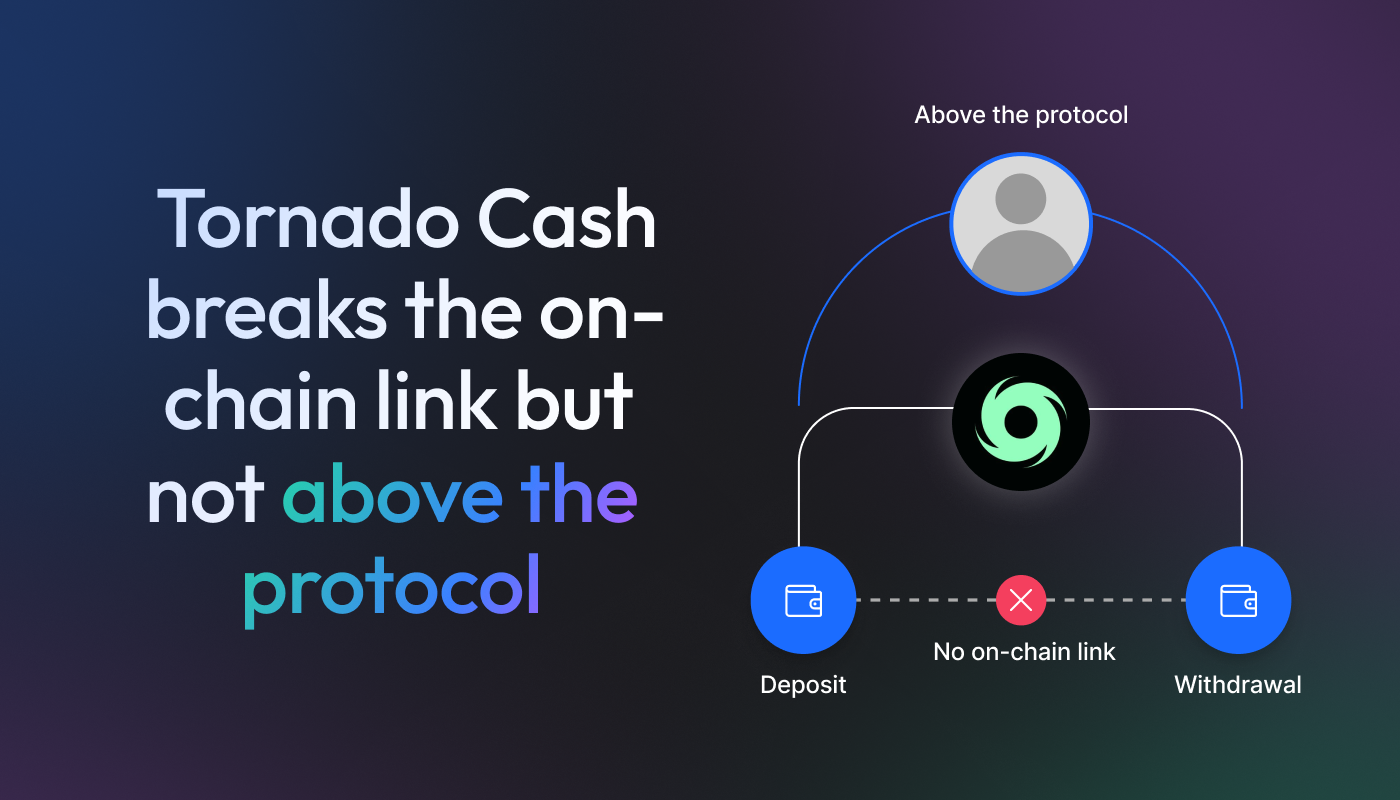
Crypto tracing fails at a mixer because the protocol exists to sever the link between the wallet that deposits and the wallet that withdraws. Against a careless user, timing and denomination patterns still narrow the field. Against a patient one who waits weeks and withdraws into an address with no prior activity, they narrow it without closing it.
The legal picture around mixers also moved, which matters for how investigators frame their reporting. Tornado Cash was sanctioned by the US Treasury in August 2022, and in March 2025 Treasury removed it from the sanctions list, following the Fifth Circuit's November 2024 ruling in Van Loon that immutable smart contracts are not sanctionable property. Interacting with the protocol is no longer a sanctions violation in itself, though criminal exposure for individual operators continued past the delisting.
Association is not attribution. Funds passing through a mixer tell you something about intent. They do not name who controls the wallet on the other side. The full 2026 picture is in our Tornado Cash investigation playbook.
Why can't a fresh wallet be traced to anyone?
A fresh wallet cannot be traced to anyone on-chain because it was created for a single operation and has nothing to trace. No counterparty history, no exchange deposit, no flagged address and no entity tag. There is nothing for a clustering heuristic to grip.
Investigators sometimes treat this as a data gap that a better tool will eventually close. The absence is the point. The wallet was built to be empty, and processing an empty history more cleverly does not fill it. This is the wall that sits behind the other three, because a mixer withdrawal, a bridge exit and a private handoff all deposit into one.
Why does a cross-chain hop break the trail?
A cross-chain hop breaks the trail because each chain sees a separate, unrelated wallet once funds move through a bridge. Context does not travel with the money. Coverage across more chains helps you follow value, and it still leaves you holding two addresses on two ledgers with no shared history.
Zhou's sequence is worth reading again on this point. The funds did not stop at the mixer. They moved through it and then through bridges, which is the pattern investigators now see far more often than a single mixing step. Multiply that across three or four hops and the reconstruction becomes an argument rather than a record.
Why is a private handoff the hardest wall to see?
A private handoff is the hardest wall to see because no regulated venue is involved. Peer-to-peer settlement, an over-the-counter desk or a private arrangement between two parties leaves no exchange holding a verified account record, so there is no lawful request to send and no customer file to obtain.
This is the quietest of the four and the least written about, which is a poor reflection of its scale. In its April 2025 report Inflection Point, the UN Office on Drugs and Crime estimated that industrial-scale scam centres generate close to $40 billion in annual profits, and described how criminal groups launder those proceeds through cryptocurrency and underground banking.
Money moving through that kind of channel does not produce a subpoena target. It produces a gap.
What do all four walls have in common?
All four walls attack the same thing: the wallet's last link to a known entity. Different techniques, one target.
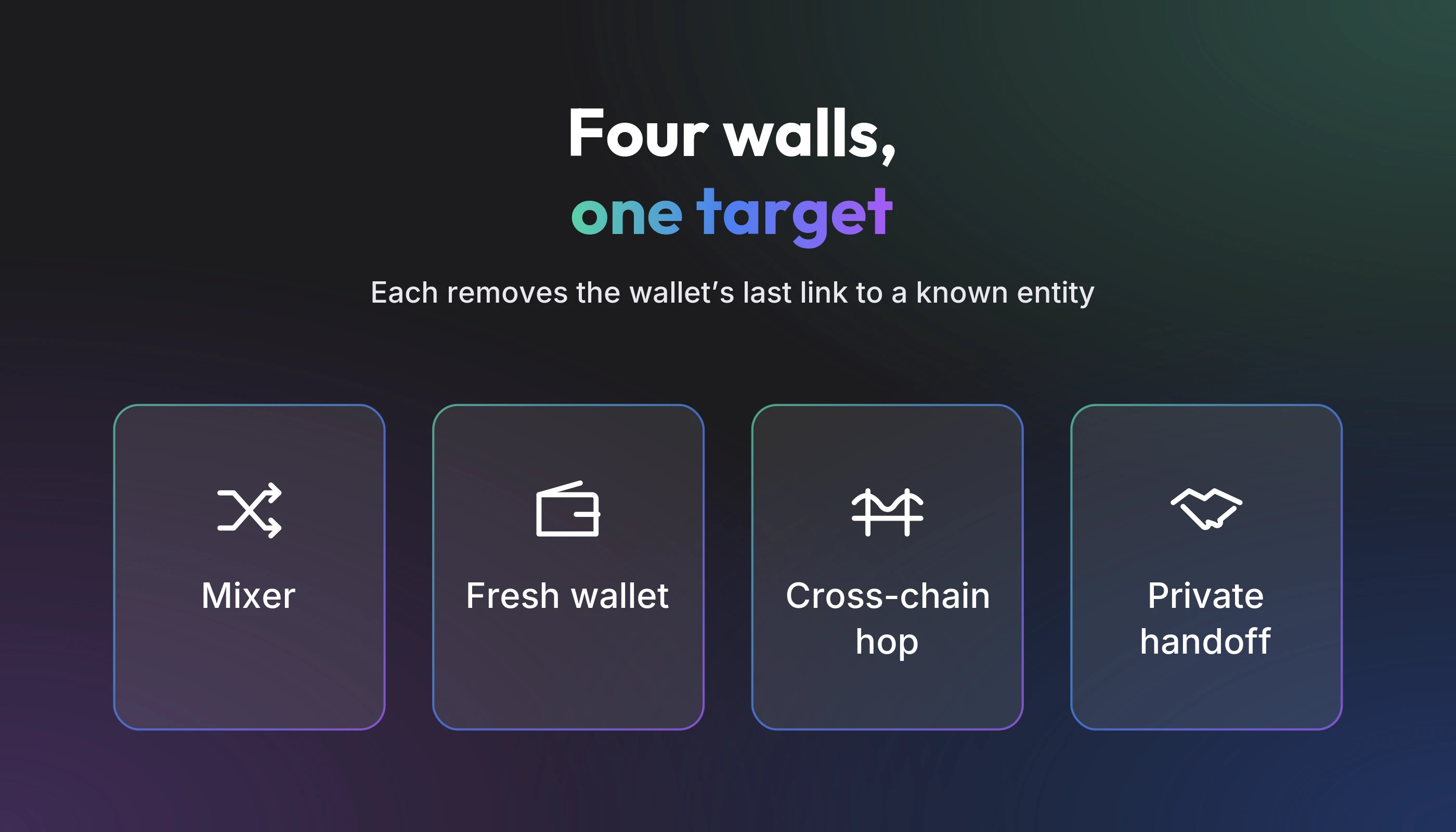
On-chain attribution works by finding a connection between an address and something already identified: a regulated exchange deposit, a flagged address, a tagged service. Remove that link and the graph has nothing to return. The data was never recorded, so there is nothing to recover by processing it harder.
That reframes the problem usefully. The question stops being how to squeeze more from the ledger, and becomes what other evidence exists once the ledger goes quiet.
What is off-chain crypto attribution?
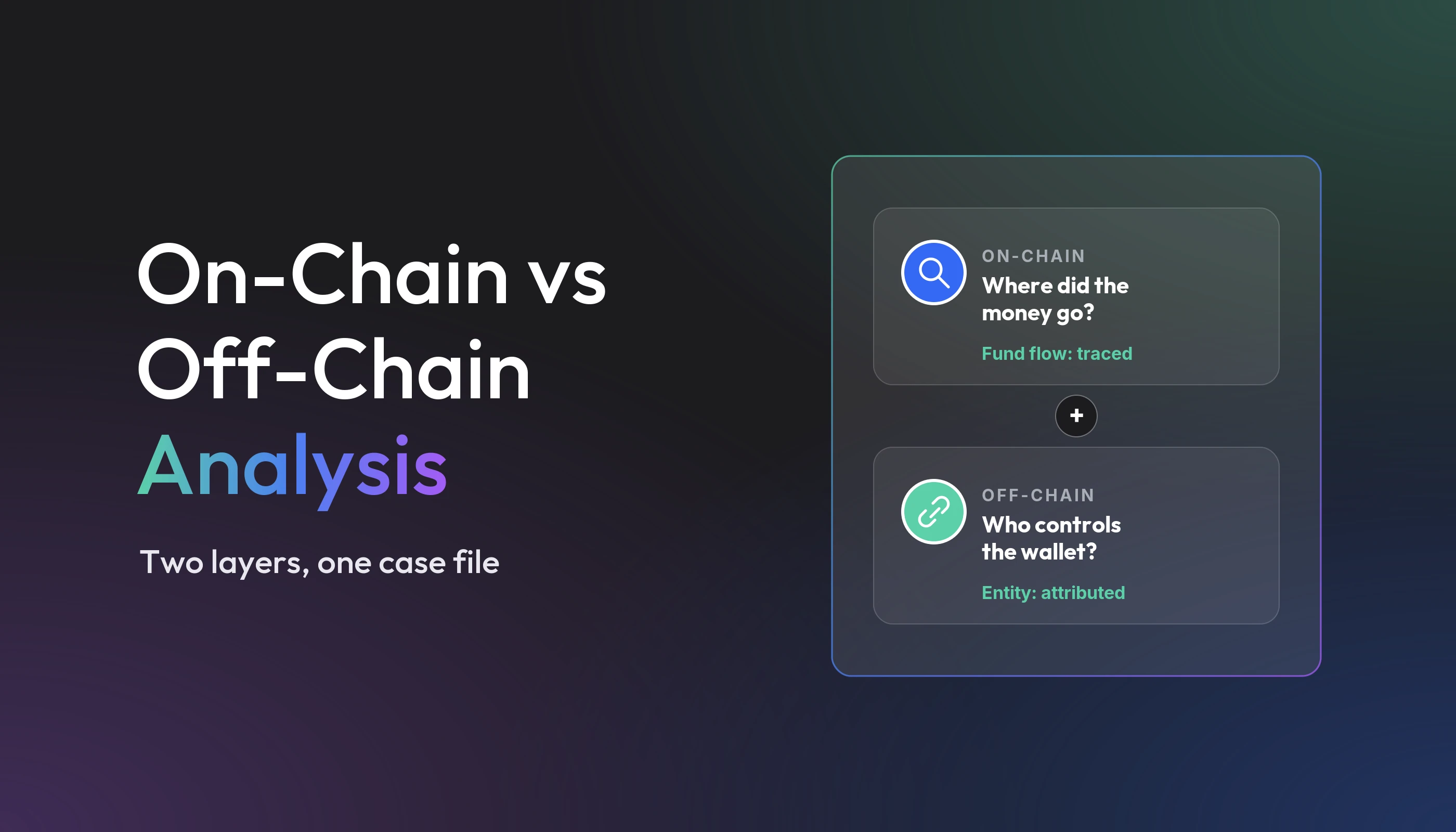
Off-chain crypto attribution links a wallet to the real-world entity that controls it without relying on an on-chain connection between wallets. That independence is what lets it work at all four walls, and it is the layer Addressable Investigations built Spectra around.
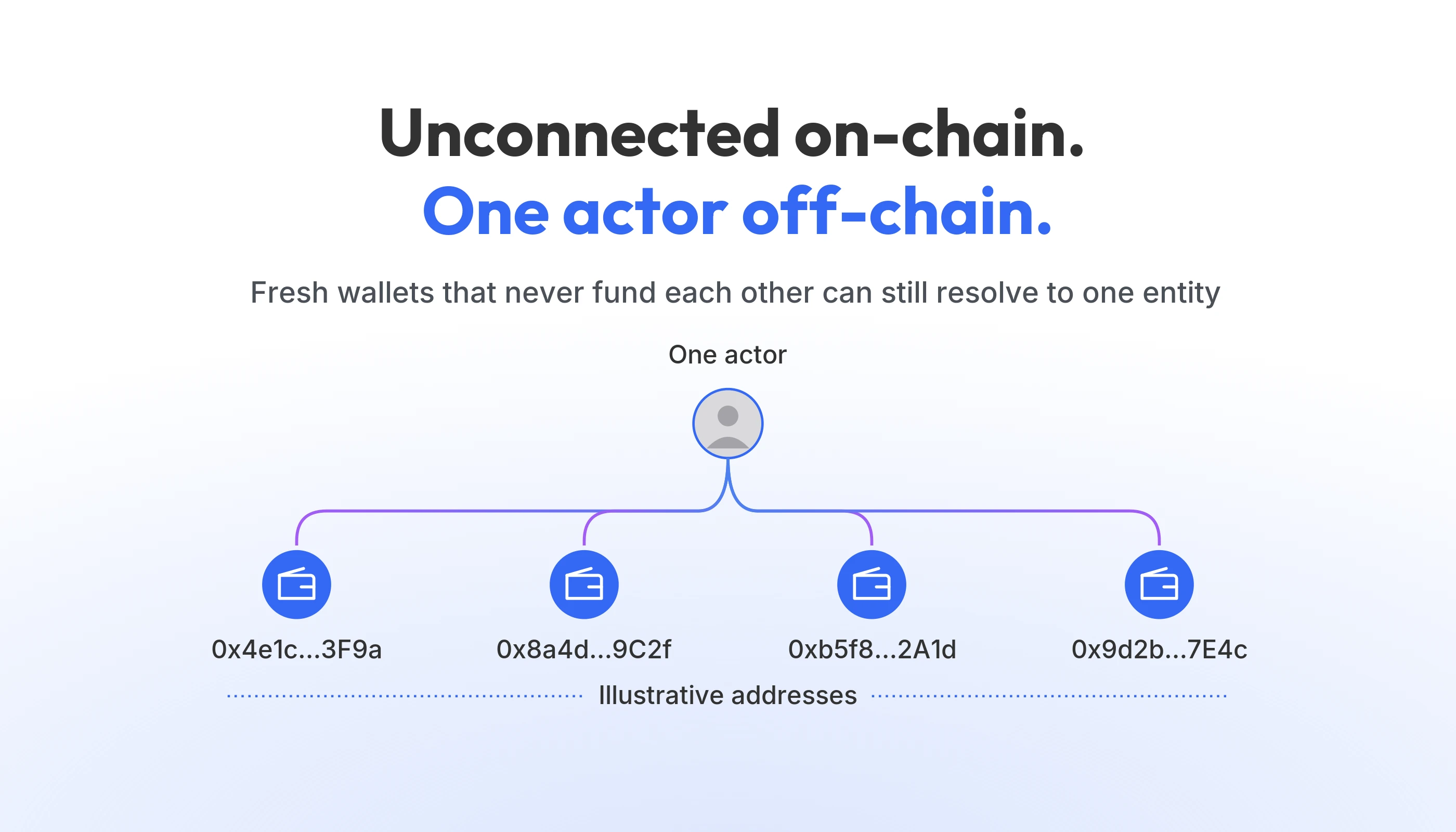
What it produces is leads and digital evidence: investigative starting points when the chain goes quiet, and time-stamped records structured for legal proceedings. The property that matters is persistence. It holds even as actors change wallets, and it remains effective when users attempt to mask their activity through commercial VPN infrastructure.
We do not publish the specific signals behind it, and that is deliberate. The people running these operations read the same material investigators do, and a published method is a method they can work around. What we will describe is what it delivers.
Ten fresh wallets opened after a mixer withdrawal, never funding each other, are ten unconnected entities on-chain. Off-chain, they may be one actor. That difference is the case.
How do on-chain and off-chain attribution work together?
They work sequentially, and the off-chain layer does not change how the on-chain side of the case is worked.
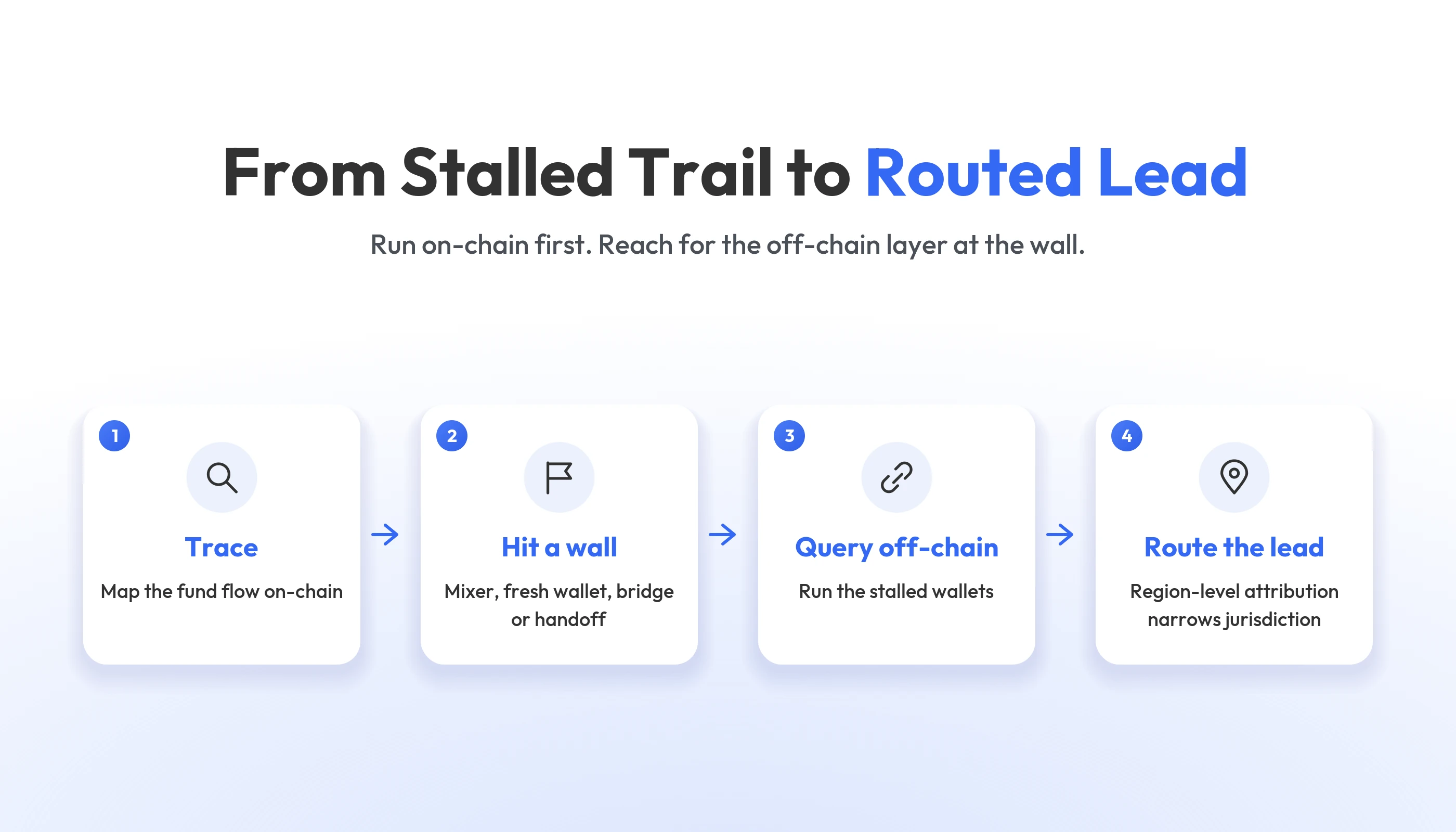
Run transaction analysis first. Map the fund flow and pursue any connection to a known entity where one exists, because that route produces the highest-quality answer available. When the trail reaches one of the four walls, query the off-chain layer against the wallets involved. If they share an attribution signal, the case continues and region-level attribution narrows the jurisdiction. If they do not, the file closes on an answer rather than staying open on a maybe.
Teams running criminal investigations, token recovery and corporate investigations use it the same way, alongside the blockchain analytics tools they already run.
For a case-shaped example, the pig butchering investigation playbook follows a case from the victim's first deposit up to the operator wallet at the top of the laundering tree, which is where wall two usually appears in practice.
Which wall is your case stuck at?
Naming the wall is the first useful step, because a mixer case and a cross-chain case fail for different reasons and need different next steps. The habit of calling every stalled investigation cold hides that distinction.
It also sets a realistic bar for what an outcome looks like. The Prince Group case is the clearest recent example of an investigation reaching the top of an operation. In October 2025 the US Department of Justice filed a civil forfeiture complaint against approximately 127,271 bitcoin, tied to forced-labour scam compounds in Cambodia. Chairman Chen Zhi was arrested in Cambodia in January 2026 and extradited to China. Cases that get that far are rare, and none of them get there on fund tracing alone.
The investigators who close these cases fastest tend not to be the ones with the best single tool. They are the ones who know which wall they have hit and what to reach for when they get there.
FAQ
Why do crypto investigations stall even with good tools?
Because the most common failure points are structural rather than technical. Mixers, fresh wallets, cross-chain hops and unregulated handoffs all remove the wallet's link to a known entity, which is what on-chain attribution depends on. Processing the ledger more thoroughly cannot restore a link that was never recorded in the first place.
Does off-chain attribution replace blockchain analytics?
No. Fund tracing still depends on on-chain analysis, and tracing to a regulated exchange remains the highest-quality route to a verified name. The off-chain layer activates when the on-chain trail ends. The two run alongside each other, and most teams add the off-chain layer to the analytics stack they already use.
Can a wallet with no transaction history be attributed?
Not from the chain, because nothing has been recorded to work with. A wallet with no history gives clustering heuristics and entity tags nothing to match. It can still be attributed through an off-chain attribution layer, which does not depend on the wallet having any on-chain history, and the result arrives as a lead for the case file.
Which laundering step breaks attribution most often?
The steps compound rather than compete. Bybit's chief executive described the untraceable portion of the 2025 theft moving into mixers, then through bridges, then out to peer-to-peer and over-the-counter platforms. Each step removes a different link, and the wallet at the end of the chain usually has no history at all.
What does it mean when the crypto trail goes cold?
It means on-chain analysis can no longer connect a wallet to a known entity. The funds may still be visible on the ledger, but nothing ties the address to a person, company or service. A cold trail is a status rather than a verdict: the off-chain layer can often continue from that exact point.