Crypto Investigation Software in 2026: What the Category Actually Covers and Where On-Chain Tools Stop


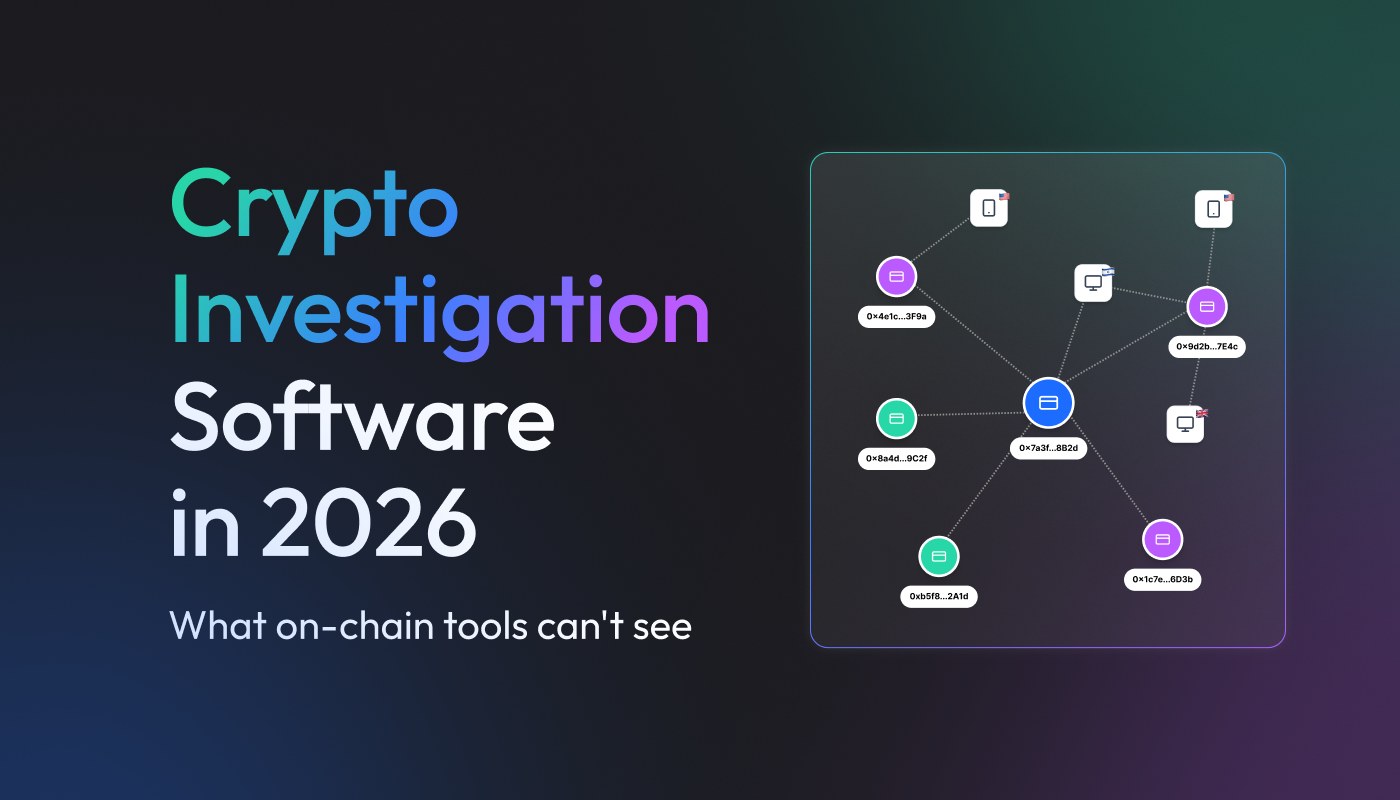
Most teams deploying crypto investigation software discover the same thing during their first serious case. Tracing where funds went is achievable. Determining which real-world entity controls the wallet at the end of that trail is a different problem, and the tool that solved the first one is rarely equipped to solve the second.
The distinction matters because fund tracing and entity attribution depend on different categories of data. Blockchain transaction analysis works on public ledger data. Entity attribution requires a second layer that connects wallet activity to real-world entities, and that layer does not exist on-chain.
On-chain data tells you what happened. It does not tell you who did it. This is the practical state of the category in 2026.
What does crypto investigation software actually do?
The category covers two distinct functions.
The first is blockchain transaction analysis. Following the movement of funds across wallets and chains, identifying mixer use, clustering wallets that share a controller, and producing fund-flow visualisations suitable for legal proceedings. Mature work. Court-defensible. Built into every serious investigator's day.
The second is entity attribution. Determining which real-world entity controls a given wallet, connecting wallet activity to the actor running it, and producing intelligence that closes cases rather than just describing them.
These functions are usually presented as a unified capability inside investigation platforms. In practice they rely on entirely different categories of data and have very different ceilings against careful actors.
Where do on-chain investigation tools work well?
Chainalysis and TRM are the two established on-chain forensics platforms used by law enforcement globally. They are good at what they were built for. Address clustering, cross-chain transaction mapping, fund-flow visualisation, and known-entity tagging are well-developed capabilities across both.
For an investigator tracing funds through a layering scheme where the wallets involved have touched known exchange infrastructure or flagged addresses, these platforms return results quickly and with high confidence. Multi-chain support and DeFi protocol coverage have expanded significantly over the past two years. The current tooling is a real step up from where the category sat five years ago.
These platforms are the on-chain layer. Their work is real, court-tested, and additive to anything that operates above them.
Where do on-chain investigation tools reach their limit?
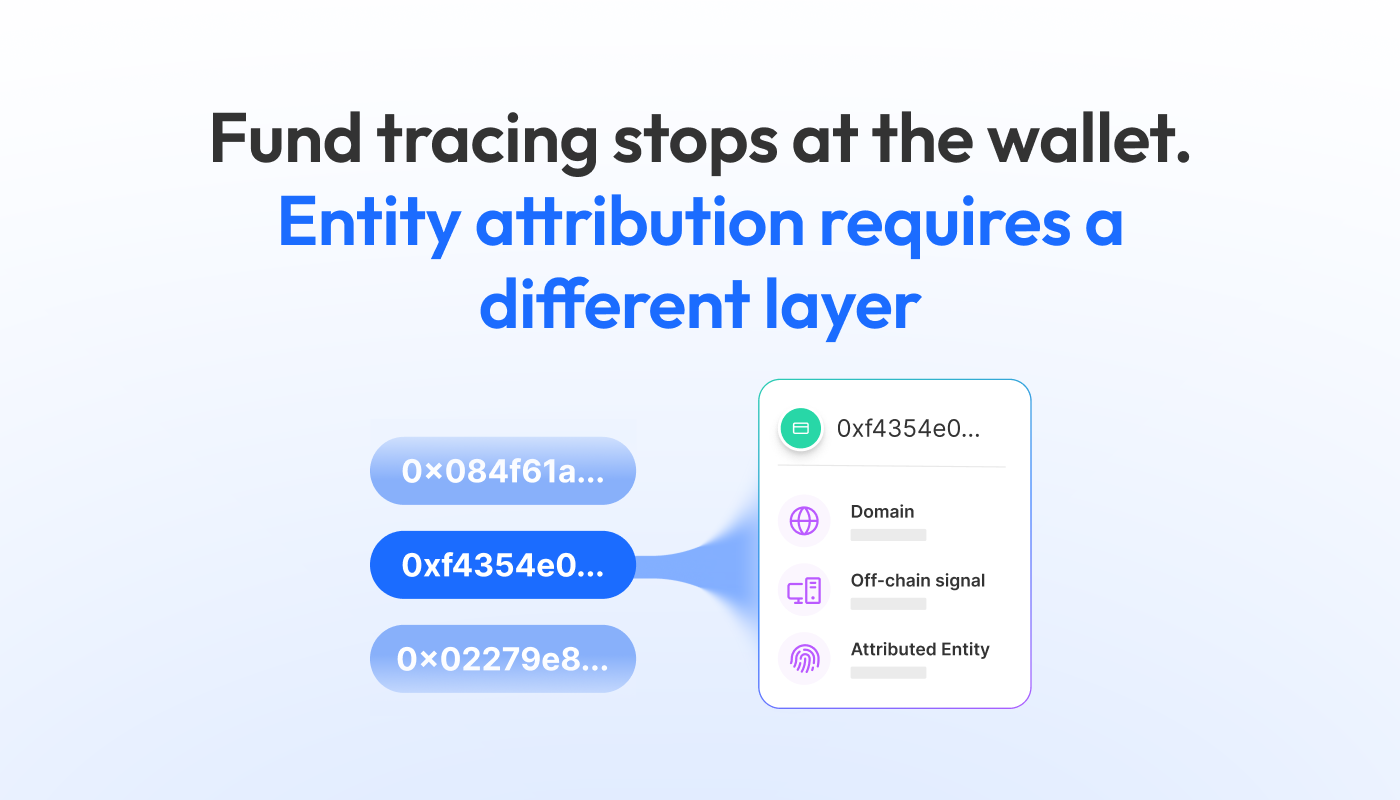
Fund tracing stops at the wallet. The limit is structural, not a shortcoming of any one tool.
Blockchain forensics works by identifying connections between wallet addresses and known entities. If a wallet has touched a regulated exchange deposit address, it can be attributed to that exchange. If it has touched a known ransomware payment address, that connection is flagged. When a wallet has no contact with any known entity, the attribution graph returns nothing.
Sophisticated actors design their activity precisely to engineer that condition. Fresh wallets, mixer withdrawals, cross-chain hops through decentralised bridges, and address rotation are all techniques built to leave the attribution graph empty. Against a careful target, the on-chain trail reaches a plateau that better processing of on-chain data cannot move.
In live investigations against careful actors, on-chain attribution alone often cannot complete the picture. This is widely understood within the investigator community. It is the reason serious investigations now run with more than one attribution layer.
What is off-chain attribution and why does it change the investigation?
A separate category of attribution data has emerged. It does not depend on on-chain links between wallets. It is off-chain data on wallets that persists even as actors change wallets.
The relevant property for investigators is simple. It remains effective even when users attempt to mask their activity through commercial VPN infrastructure or other masking techniques.
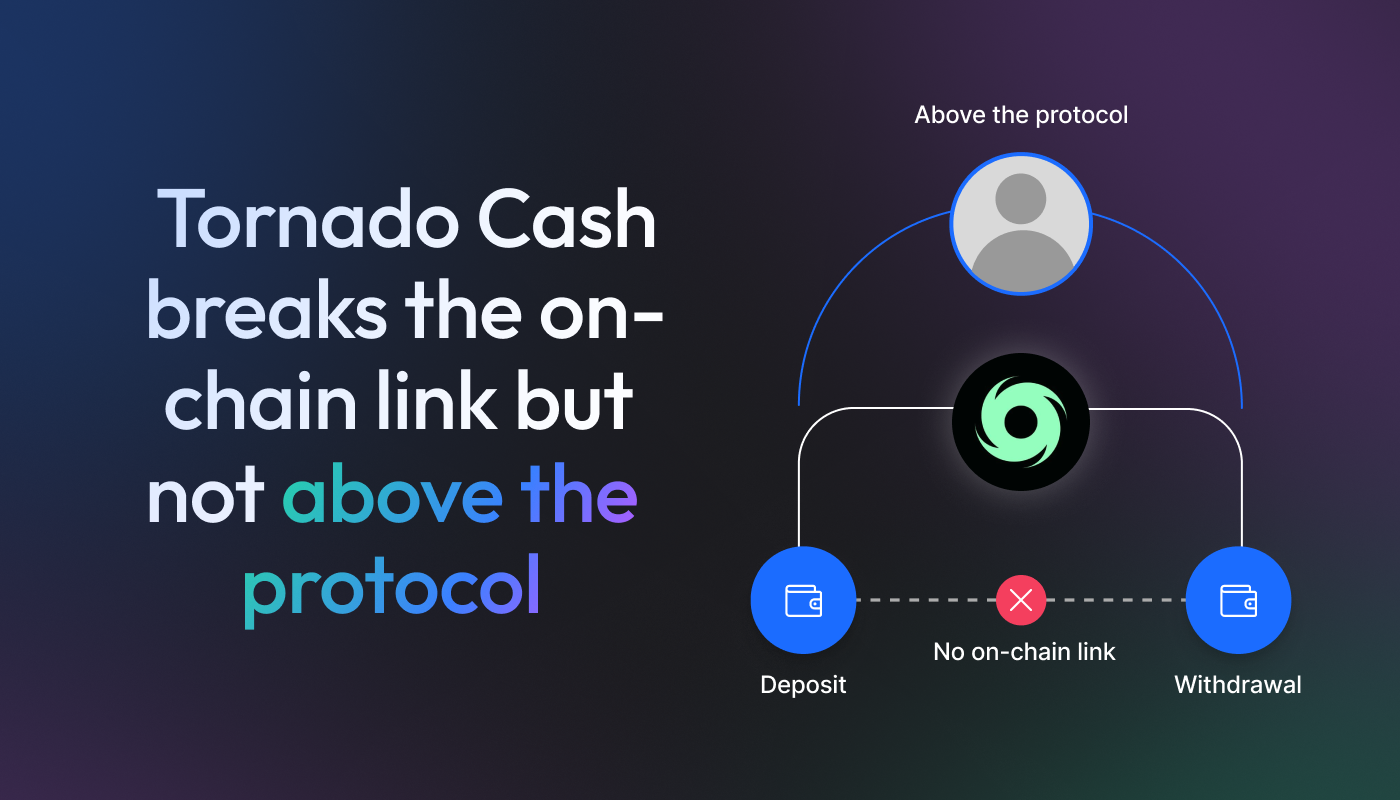
A target who has routed funds through a mixer and withdrawn into fresh wallets has, on-chain, severed every visible link between deposit and withdrawal. Above the protocol, the actor running those wallets is still visible. That is the layer off-chain attribution operates at.
Investigators do not need to understand the full mechanism to use it. The relevant point for case workflow is that where on-chain attribution stops, off-chain attribution often picks up. The two layers are complementary, and the investigators closing the hardest cases in 2026 are the ones running both.
Addressable Investigations is the platform built around this off-chain attribution layer. It connects wallets to real-world entities and produces region-level attribution that holds up against common masking techniques. The output is leads and digital evidence: investigative starting points when the on-chain trail goes cold, and time-stamped records that hold up in legal proceedings.
How does off-chain attribution fit into an existing investigation workflow?

Off-chain attribution does not replace on-chain forensics. Fund tracing still depends on blockchain transaction analysis. The two layers are additive.
On-chain forensics handles fund tracing. Off-chain attribution handles entity resolution when the on-chain trail goes cold.
The practical workflow stays sequential. Run transaction analysis first to map the fund flow and identify any connections to known entities. When the trail enters a mixer, ends at a fresh wallet, or routes across chains with no counterparty data, query the off-chain attribution layer against the wallet addresses involved. If those wallets share an attribution signal, the case continues. If they do not, the investigator at least has a definitive answer rather than an unresolved one.
For investigators running cases inside traditional blockchain analytics tools, this is additive. The output is the same kind of investigator-grade intelligence the rest of the case is built on, drawn from data that on-chain tools do not see.
How do real cases close in 2026?
The cases that close share a pattern. Fund tracing handled by blockchain analytics. Entity attribution handled by exchange records where available, and by off-chain attribution where the on-chain trail does not reach. Region-level attribution used to narrow jurisdiction and route the legal process to the right agency.
An investigator working with only one attribution layer has a partial picture. They can prove movement of funds. They cannot always prove who moved them. For prosecution, that gap is often the difference between a charge and a closed file.
An investigator with both layers has a complete picture across the cases that matter most: the ones where the target deliberately broke the on-chain trail.
That is the practical state of crypto investigation software in 2026. The tools have caught up. The workflow has matured. What separates the crypto-investigators who close cases from the ones who do not is no longer access to data. It is knowing which layer to reach for at each stage.
See what Addressable Investigations adds to your forensics stack: https://investigations.addressable.io/