How to Link Multiple Crypto Wallets to the Same Owner


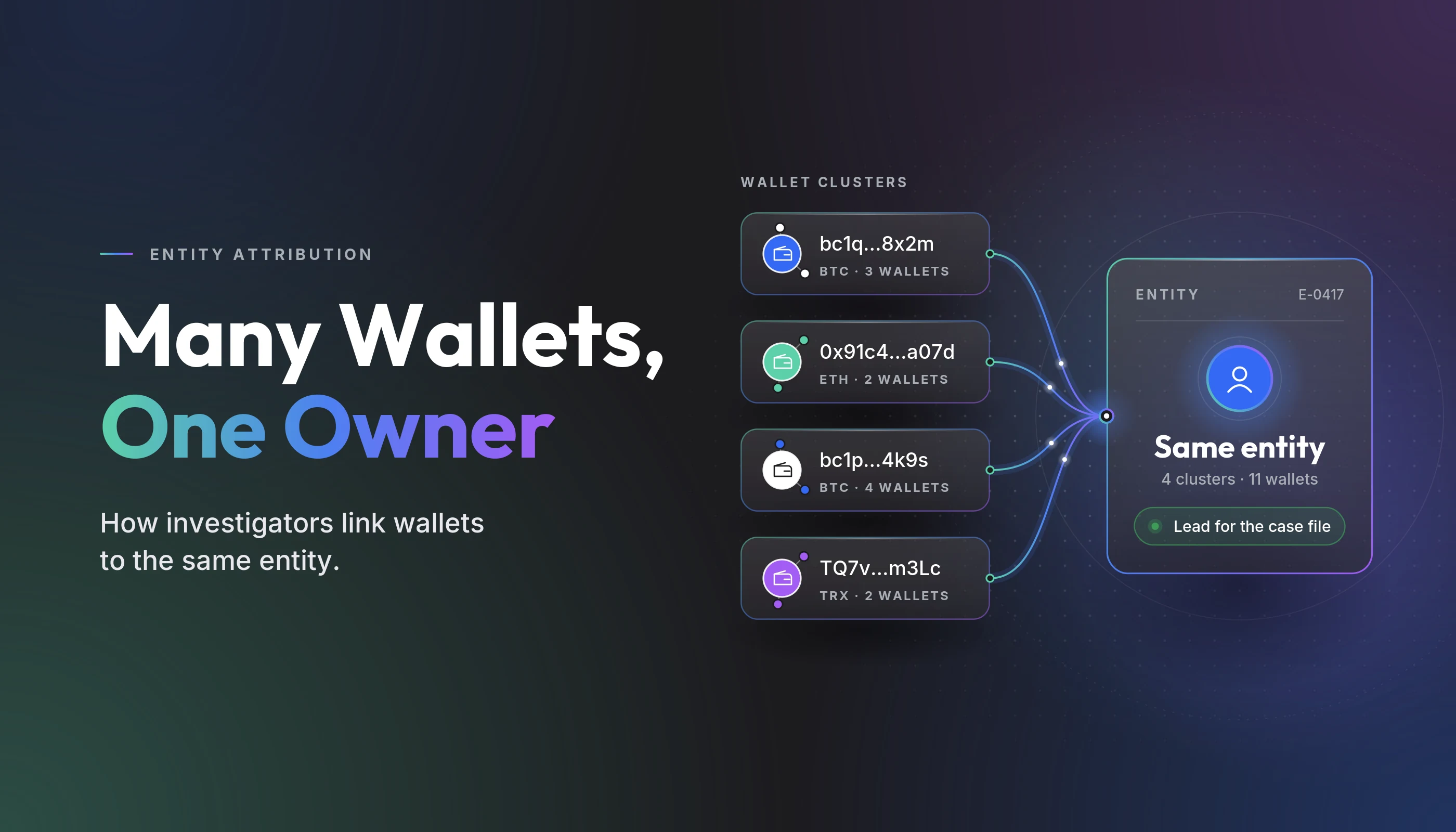
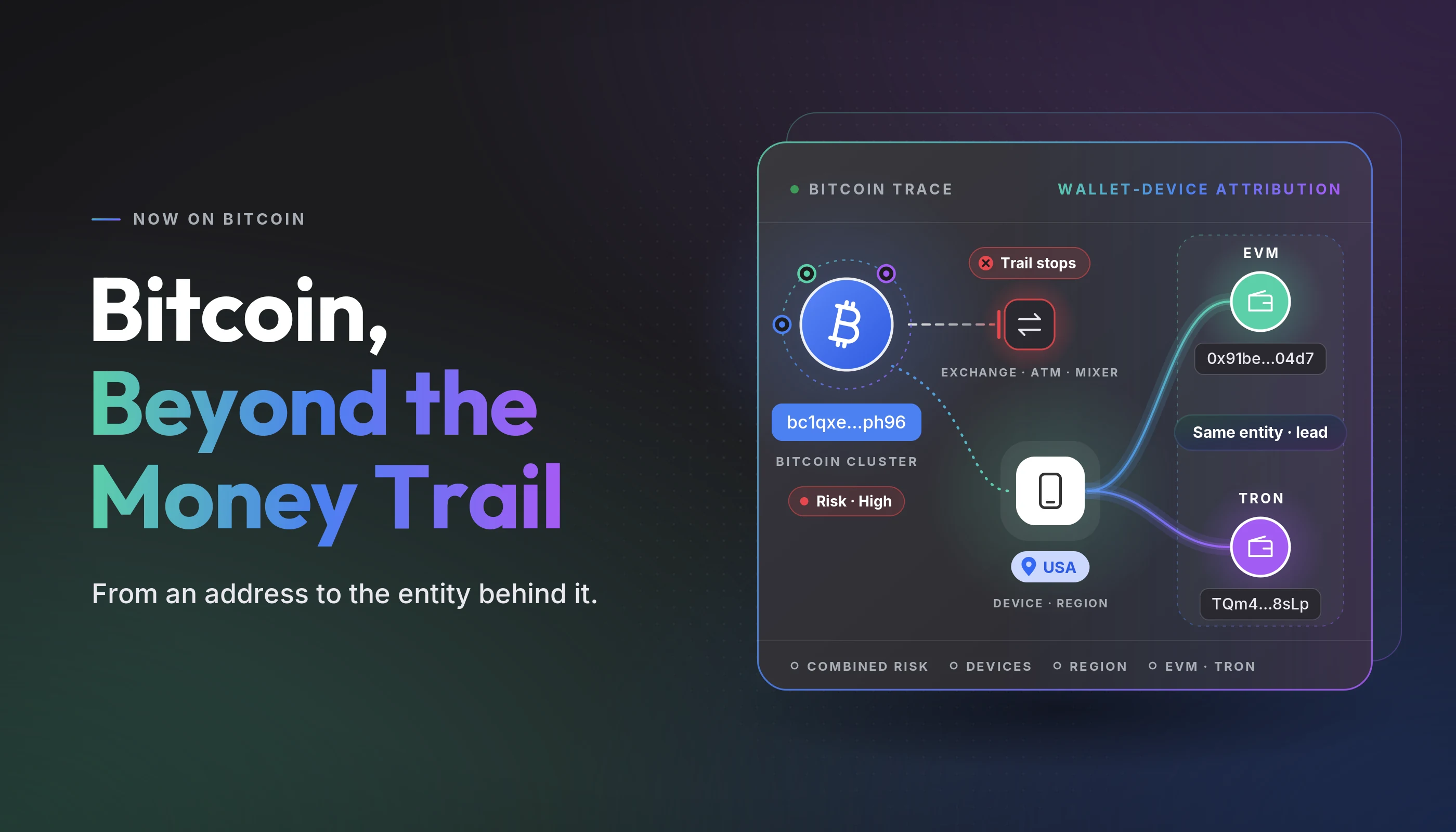
Investigators link crypto wallets to the same owner in two ways. On-chain clustering groups addresses by how they transact together, such as inputs spent in one transaction or fees paid by one funder. Off-chain attribution links wallets that share no on-chain path at all. Clustering is the first step; off-chain attribution covers where clustering breaks.
Almost every serious case involves more than one wallet. An actor who receives victim funds in one address, pays fees from another and cashes out through a third is still one actor, and the case gets stronger every time those addresses are proven to belong together. Linking wallets is how a list of transactions becomes a picture of an operation.
What does it mean to link wallets to the same owner?
Linking wallets to the same owner means showing that several addresses are controlled by one entity: a person, a group or a service. The result is often called a cluster, and it lets an investigator treat many addresses as a single subject.
That matters for practical reasons. A cluster shows the full size of an operation rather than one slice of it. It finds additional addresses for freezing and seizure requests. It connects victims who paid into different addresses. And it gives prosecutors one subject to describe instead of dozens of unrelated strings.
Sanctions work shows why a complete picture is hard. The US Treasury notes that OFAC's digital currency address listings "are not likely to be exhaustive." A designated actor's listed addresses are a starting point, and the rest have to be linked by investigation.
How does on-chain clustering link wallets?
On-chain clustering links wallets by applying heuristics to how addresses behave on the ledger. The oldest and most widely used is the common-input ownership heuristic: when several addresses are spent together as inputs to one Bitcoin transaction, they are assumed to share an owner, because spending them requires control of each one's keys.
Researchers showed in the 2013 paper A Fistful of Bitcoins that this heuristic, combined with change-address detection and interactions with known services, could name large parts of the Bitcoin economy. A later study, The Unreasonable Effectiveness of Address Clustering, explained why simple heuristics work so well in practice: address reuse, avoidable merging and the way clusters keep growing over time.
The main on-chain signals investigators use today:
- Common input. Addresses spent together in one transaction.
- Change address. The output that returns leftover funds to the sender, identified by wallet software patterns.
- Fee funding. On account-based chains such as Ethereum or Tron, the wallet that pays a new address's fees is often controlled by the same actor.
- Deposit address reuse. Several wallets sending to the same exchange deposit address, which usually belongs to one customer account.
- Timing and amounts. Repeated delays, batch sizes and fee settings that point to one operator or one script.
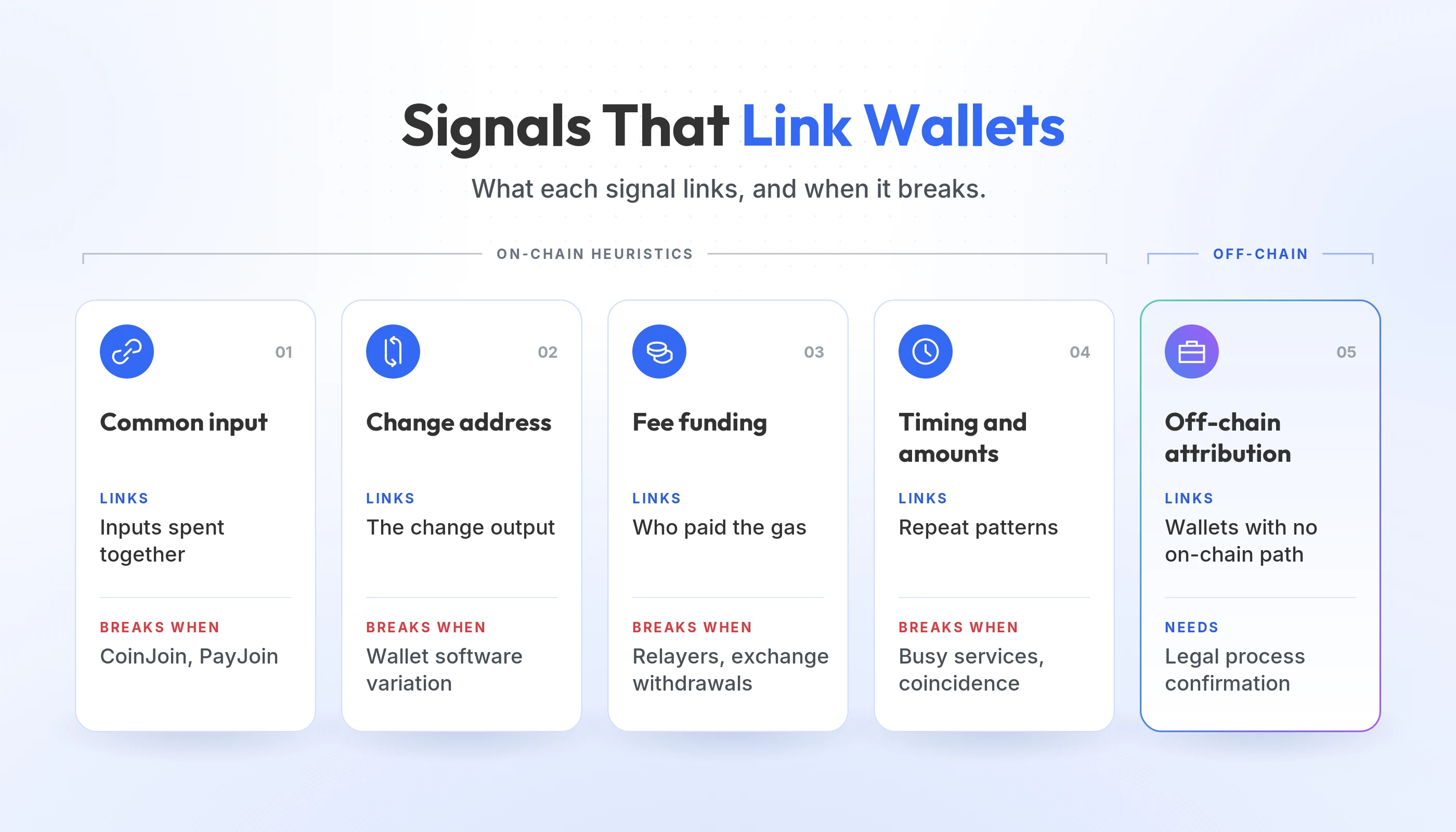
Each signal has a different strength. Common input on Bitcoin is strong in ordinary transactions. Timing patterns are weaker on their own and become persuasive when several line up.
Where does wallet clustering break down?
Wallet clustering breaks down wherever its assumptions stop holding, and laundering techniques are built to break them on purpose. Most of them are the walls we mapped in When Crypto Tracing Hits a Wall.
- CoinJoin. A CoinJoin combines inputs from many different users in one transaction. Applied naively, the common-input heuristic would merge all of them into one false cluster, so analysts have to detect and exclude these transactions.
- PayJoin. A payment where the receiver also contributes an input, which makes two owners look like one.
- Omnibus wallets. Exchanges and custodians move many customers' funds through shared addresses, so behaviour at those addresses says little about any single customer.
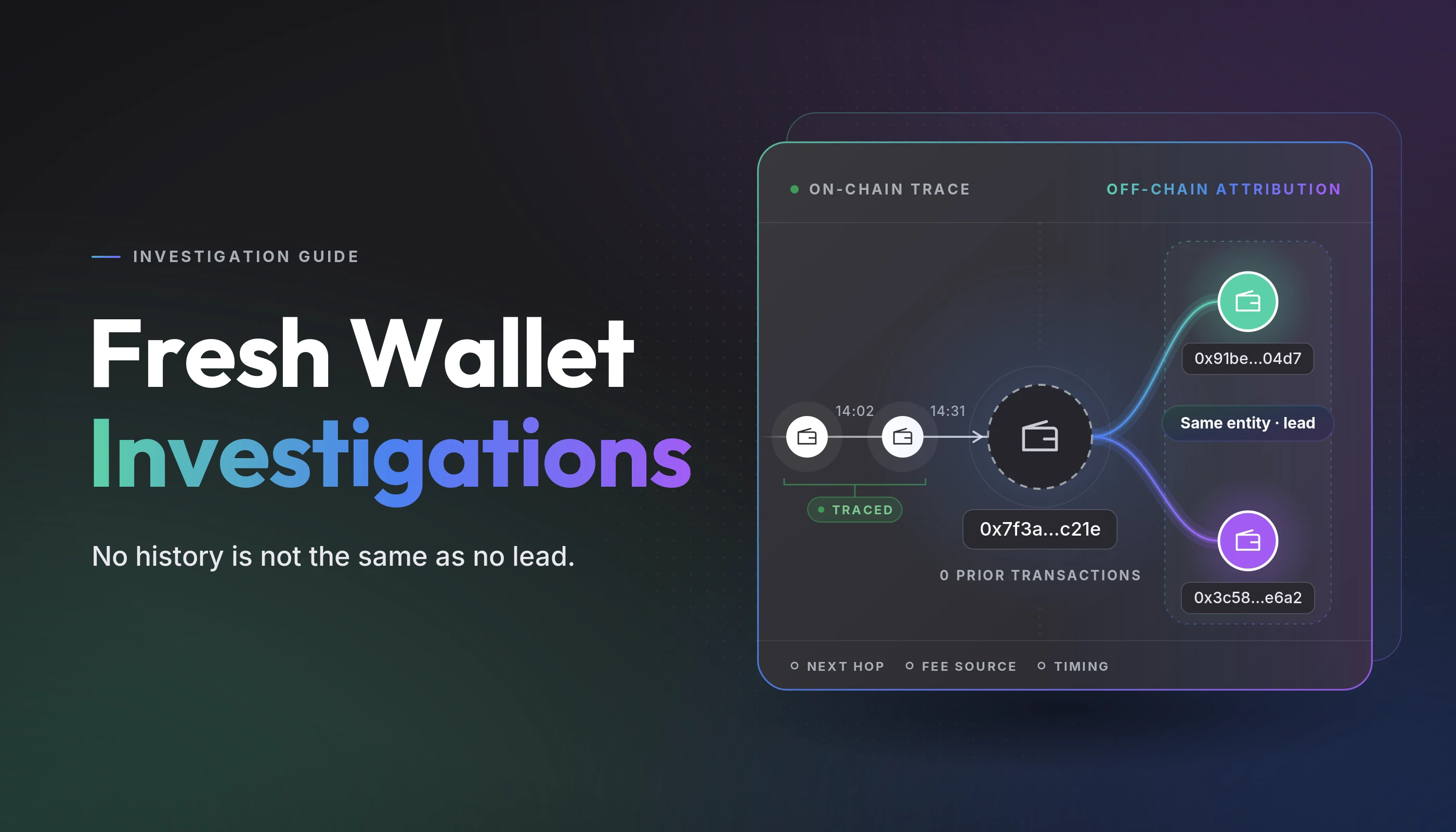
- Fresh wallets. A new address has no history to cluster. We cover this case in Fresh Wallet Investigations.
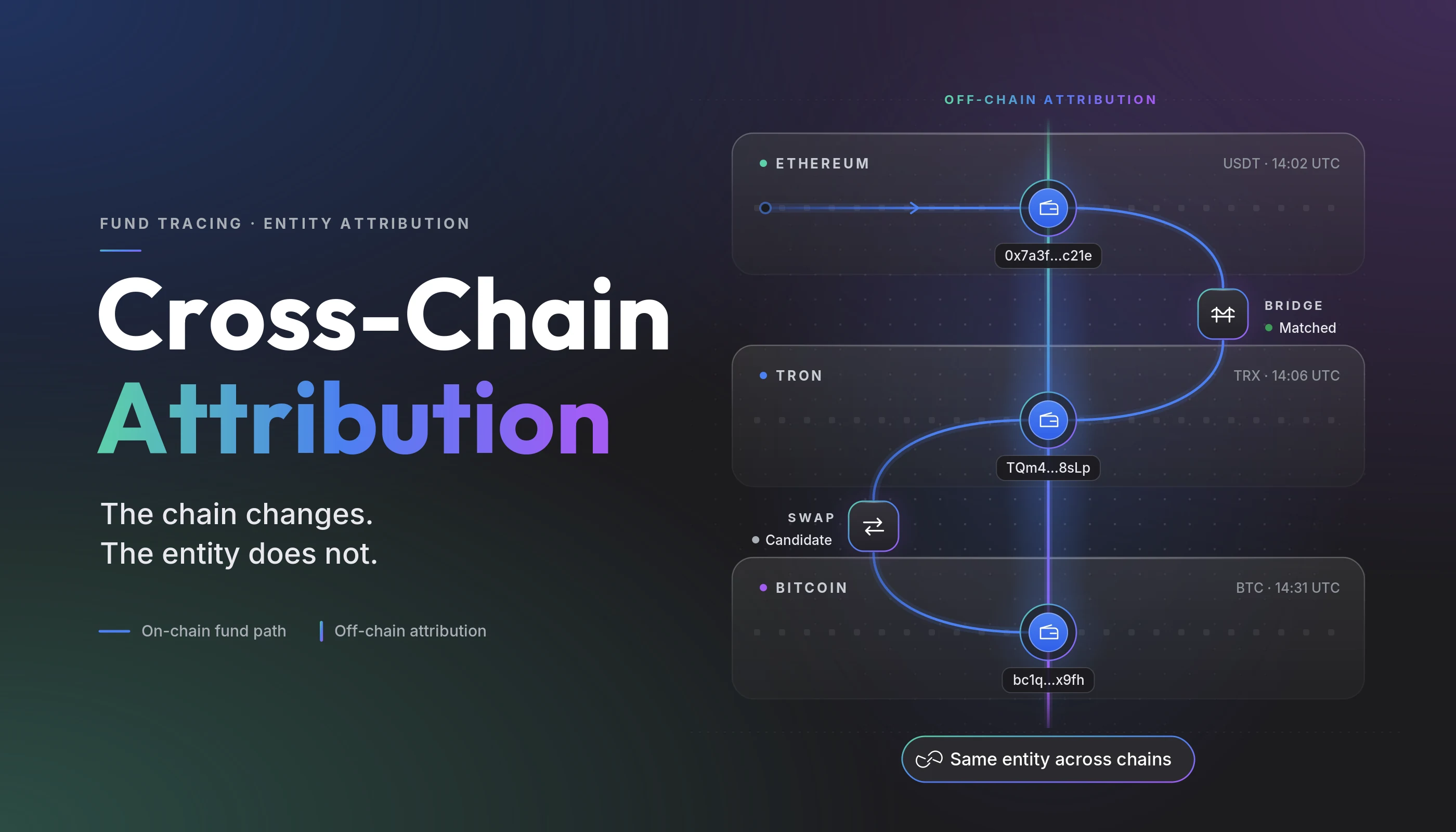
- Cross-chain hops. Moving funds to another blockchain splits the trail into separate ledgers that no single-chain heuristic can join. See Cross-Chain Attribution.
There are two kinds of error here, and both matter. A false merge ties an innocent address to a suspect. A missed link leaves part of an operation outside the case. Good practice records which heuristic produced each link, so every connection in the file can be explained and challenged.
How does off-chain attribution link wallets with no on-chain path?
Off-chain attribution links wallets with no on-chain path because it does not depend on any on-chain connection between wallets. Two groups of addresses that never transact with each other, sit on different chains or were created after a mixer can still resolve to the same entity.
This is the layer Addressable Investigations built Spectra around. It persists as actors change wallets, so rotating addresses or switching chains does not reset the link. What it produces is leads and digital evidence: wallets connected to the same entity, region-level attribution that narrows the jurisdiction, and time-stamped records structured for legal proceedings.
The two layers work best in sequence. Cluster on-chain first, because the ledger is public and fast to query. Bring in off-chain attribution where clusters stop growing, as we explain in On-Chain vs Off-Chain Analysis.
How strong is a wallet link as evidence?
A wallet link is as strong as the method behind it and the corroboration around it. A cluster built on ordinary common-input transactions is a strong inference. A link based only on timing is a lead that needs support.
Treat every link as one of three things in the case file:
- Confirmed. Supported by records obtained through legal process, such as exchange account data showing one customer behind several deposit addresses.
- Strong inference. Supported by on-chain heuristics with no contradicting signal, or by several independent signals that agree.
- Lead. A single signal or an off-chain attribution result that points to common control and tells the investigator where to request records next.
Moving links up that ladder is the real work. Leads tell you where to look; legal process turns them into evidence. Teams running criminal investigations, corporate investigations and token recovery use the same discipline, and the pig butchering investigation playbook shows it applied to one case type.