Spectra Now Supports Bitcoin: From an Address to the Entity Behind It


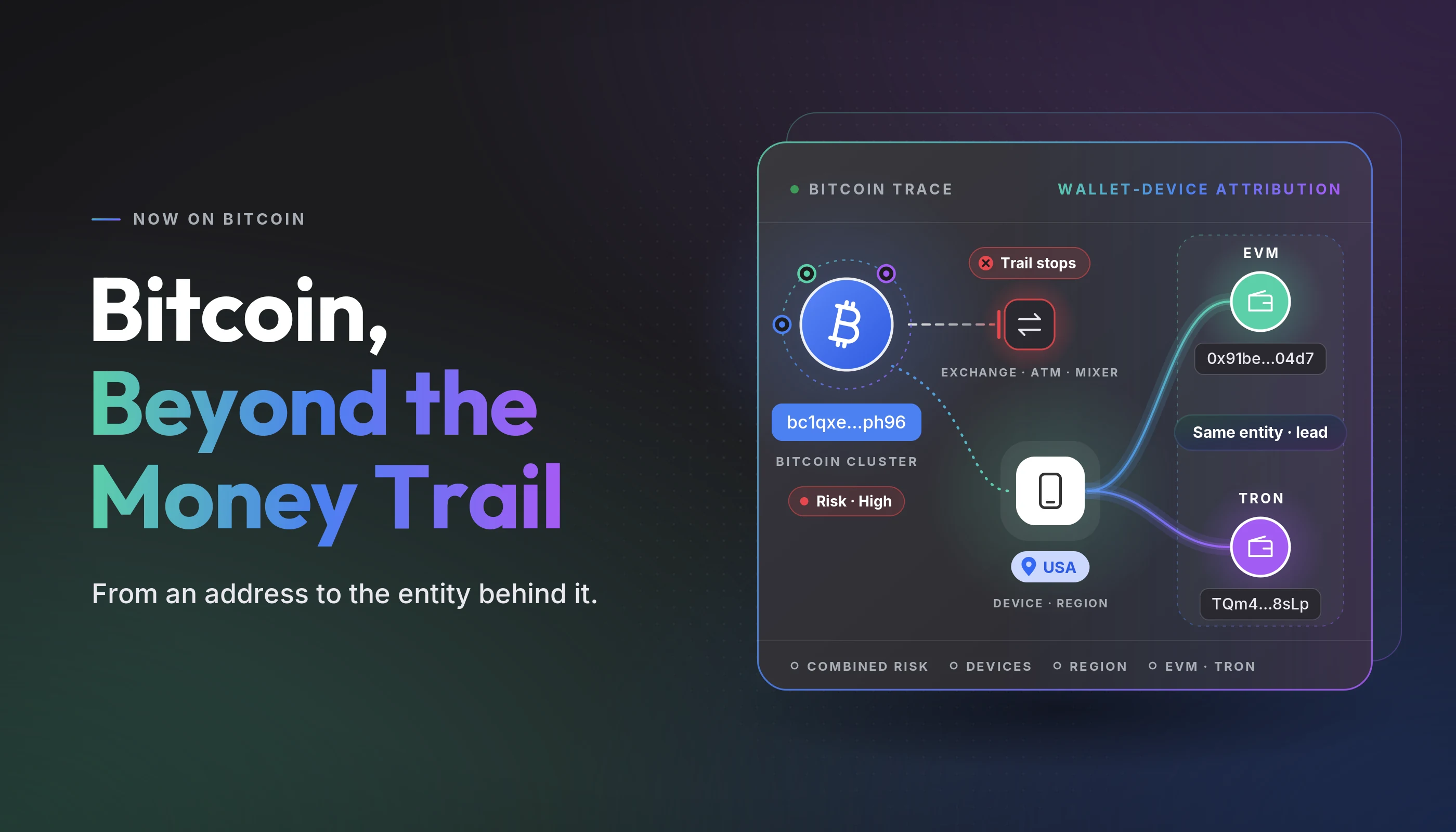
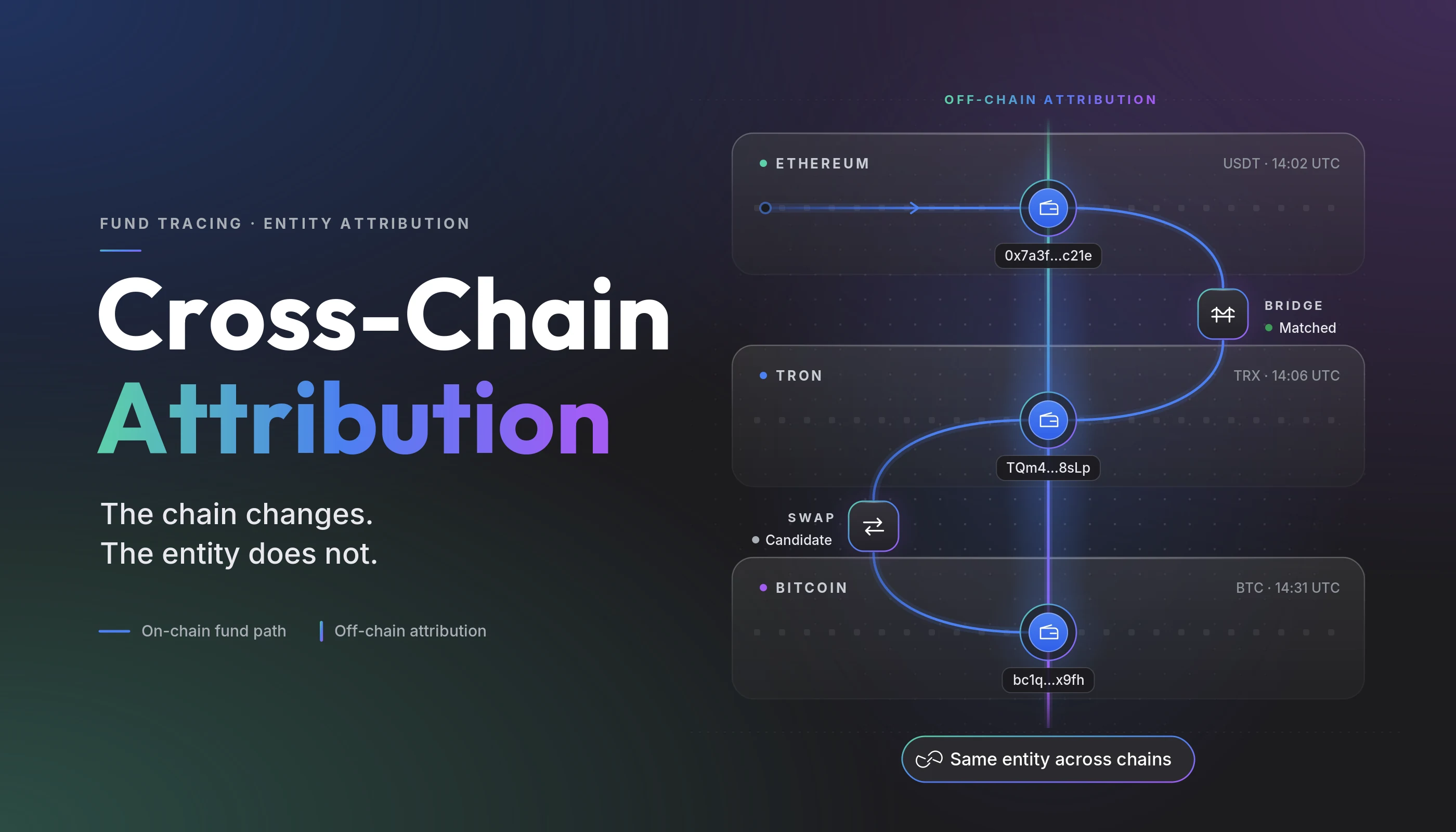
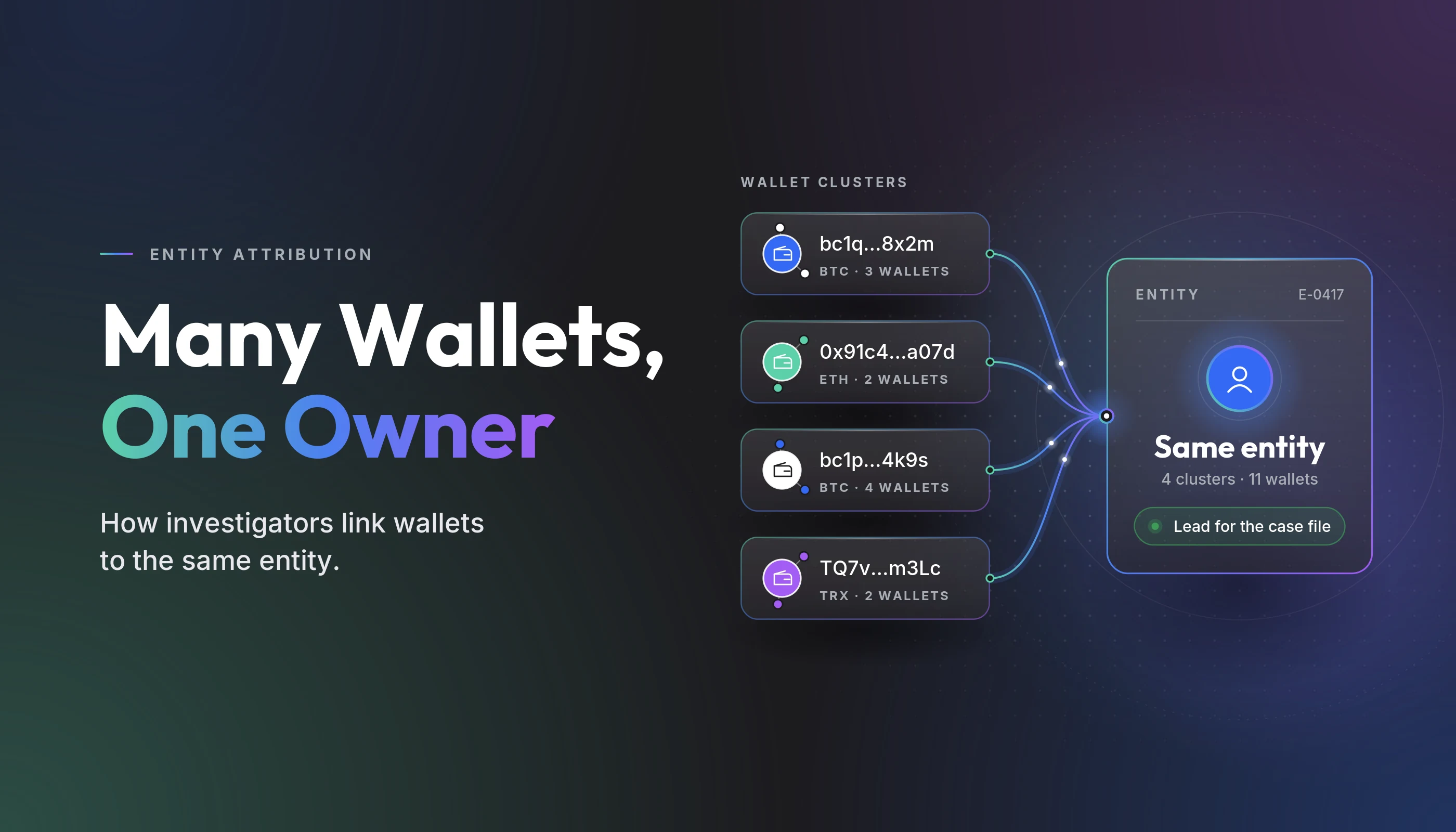
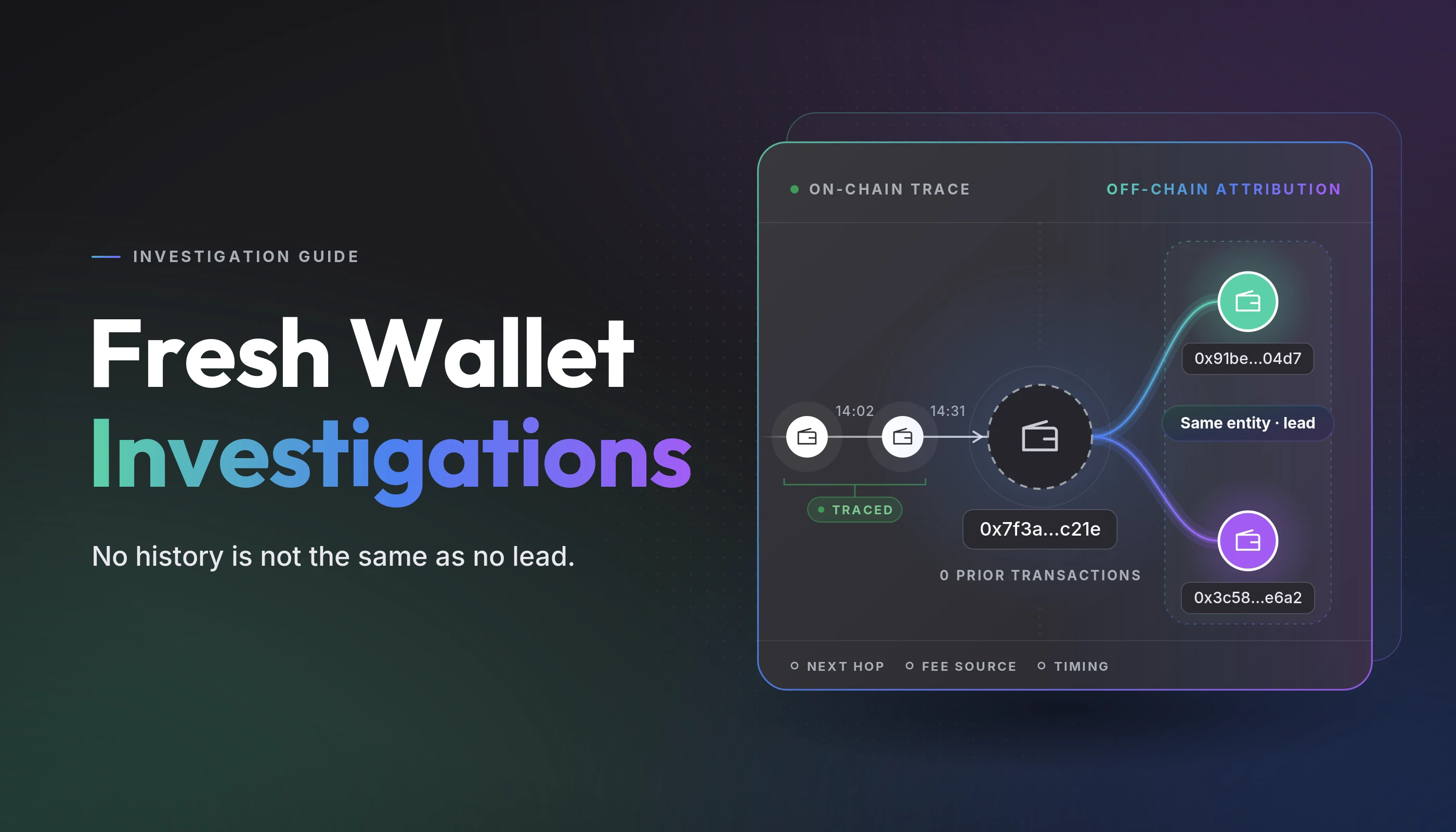
Spectra now supports Bitcoin. Investigators can trace money flows on the Bitcoin network and, when the trail stops on-chain, follow a Bitcoin address to the devices linked to it, the region those devices operate from, and the same entity's wallets on EVM chains and TRON, even when no transaction connects them.
Why do Bitcoin investigations stall?
Bitcoin investigations stall because the money trail and the entity behind it are two different things. On-chain tools follow funds from address to address, but once the trail reaches an exchange, an ATM or a mixer, they can't show who controls the addresses.
That is where many cases end. The funds are visible, the movement is documented, and the investigation still has no lead to act on.
What does Bitcoin support in Spectra add?
Bitcoin support brings wallet-device attribution to the Bitcoin network. A Bitcoin address can lead you to a device, and that device can carry region-level attribution and bridge to linked wallets on other chains, with their risk labels and trails.
- Addresses, linked to devices: see the devices linked to a Bitcoin address, when found.
- From one device to other chains: see wallets linked to that device on EVM chains and TRON, even with no transaction between them.
- Region and risk, built in: each address gets a risk score that combines all the addresses acting together with it. When devices are found, you also see the primary region they operate from.
How does it work?
It works the same way as every other chain in Spectra: start from an address and expand only where it leads.
- Search an address. Paste a Bitcoin address into Check Address, one at a time or in bulk.
- See it on the graph. The addresses acting together appear as one node, with linked devices beside it when found.
- Expand a device. It may connect to wallets on EVM chains and TRON, each with its own risk labels and money trail.
You can also bring a Bitcoin case in from another tool. With Txn hash import, paste transaction hashes and wallets from any source and get the same investigation on a graph, with the devices behind both sides of every transaction, when found.
Who is it for?
Bitcoin support is built for teams whose cases cross into Bitcoin and stop there:
- Law enforcement working fraud, ransomware and theft cases where funds move to Bitcoin.
- Token recovery firms that need a lead beyond the last on-chain hop.
- Compliance and corporate investigation teams that need to know whether an address connects to wallets they already track on other chains.
For the wider picture of where on-chain tracing stops and what continues the case, see When Crypto Tracing Hits a Wall and On-Chain vs Off-Chain Analysis.
FAQ
Can Spectra trace Bitcoin transactions?
Yes. Spectra traces money flows on the Bitcoin network, and groups addresses that act together so you can see their combined activity and risk. Where the on-chain trail stops, Spectra adds wallet-device attribution: the devices linked to an address, their primary region and the same entity's wallets on other chains.
Can I link a Bitcoin address to wallets on Ethereum or TRON?
Yes, when a device is found. A device linked to a Bitcoin address can bridge to wallets on EVM chains and TRON controlled by the same entity, even when no transaction connects them. Each linked wallet comes with its own risk labels and money trail, so the case can continue on another chain.
Can I check many Bitcoin addresses at once?
Yes. Check Address works for one address or in bulk, and the Spectra API lets teams triage addresses at scale from their own tools. Each address comes back with a risk score, and linked devices and region when found, so you can see quickly which ones are worth investigating.
Can I import a Bitcoin case from another tool?
Yes. With Txn hash import, you can paste transaction hashes and wallets from any tool into Spectra, on Bitcoin, TRON or any EVM chain. You get the same investigation on a graph, with the devices behind both sides of every transaction, when found.